
what i got wrong about abortion
(and what i want to say now)

I have never needed an abortion. Until recently, this was a small point of pride for me. If the conservative Christian case against childfree women, or anyone who engaged in family planning, was that we were playing God with our fertility, I could confidently argue that I was, but only to the extent that I was trying to prevent a pregnancy, not eradicate one. Besides, I wanted to know, aren’t we supposed to be playing God on some level, as divine emissaries, little Christs, WWJD and all that?
My early beliefs about reproduction were what you’d expect from a young Catholic girl who grew up in Reagan’s America. Children were a gift. Abortion was a sin. Motherhood, the biological kind, was the highest blessing. That last one I wasn’t so sure about, given my own lack of interest in the endeavor and the evidence of faithful, if not happy, nuns in Sunday School. Still, I was taught their faithfulness was achieved by abstinence rather than contraception. Sex and procreation went together like God the Father and Christ His Only Son, one eternally begotten of the other.
And so I might have gone on believing, definitively, if my mother weren’t an OB/GYN nurse practitioner. (While pregnant with me, she worked for a teen clinic at Planned Parenthood.) It was she who told me that, yes, God knit me together in her womb—and so did the placenta. That, yes, my body was a temple of the holy—and it was also a hotbed of nerve endings. (This was sort of gross coming from my mom, but I got it.) That, yes, my body was a vessel for good—and that vessel was entrusted to me. And if, after becoming sexually active, I chose not to be a vessel for children? Well, there was a pill for that. There was a pill for almost everything in my mother’s mind, God willing.
By the time I graduated from college then, righteous with the knowledge that restricting access to comprehensive sex education, contraception, and abortion disproportionately hurts the poor and obscures underlying systems of oppression, I had come to a position common among nice, white, Christian ladies like myself: I supported abortion rights for others but would never seek one myself—even when, after the arrival of three foster girls, Rush and I began referring to the possibility of an accidental pregnancy, not kindly, as “Nightmare Scenario.” If one happened, we agreed, we’d see it through.
Only in the last week, thanks to a brilliant book by a brilliant friend, have I been given a name for my dis-ease: internalized abortion stigma. In A Complicated Choice: Making Space for Grief and Healing in the Pro-Choice Movement, Rev. Katey Zeh asks us to examine the belief that there’s something morally and/or socially unacceptable about abortion and listen to the real, complex humans who’ve experienced them. That by listening to their stories we might build truer, kinder archetypes within ourselves, our congregations, our communities. That by listening to their stories we might practice what Alexis McGill Johnson calls “a radical act of grace.”
It is astonishing to me what you can learn by listening.
Like, how there’s a case to be made by Jewish women that restricting abortion rights is a violation of their religious freedom. (In Jewish law, abortion is not just permissible but actually mandated in some instances.) Or, how there’s strong evidence to show that the emotional harm from having an abortion comes from being denied services rather than receiving them. (Adults and teens denied abortion care are more likely to stay in abusive relationships.) Maybe most astonishing was sitting with the idea that “abortion has the power not only to save lives but bless lives.” It can create the conditions for agency, dignity, survival, growth, healing. It can bring not just grief but gift.
I was wrong to think my reproductive “virtue” could protect me from the arguments against the childfree. Besides, the majority of people who seek to terminate their pregnancy are already parents. I wish I’d said more about this in my own book. What I did say, and what I want to say again, is that there is rarely a single story when it comes to our reproductive realities. There is choice and life—and, often, as the United Methodists put it, “tragic conflicts of life with life.” Abortion is not the goal. It is an imperfect means of privileging life in the here and now—while we labor for a world that sucks less for its most vulnerable.
Katey reminded me that there’s actually a long history of clergy and faith leaders supporting the right to abortion. And if playing God just means being mindfully human, asking WWJD in today’s culture wars may not be such a bad idea. Katey takes a guess: “I imagine Jesus walking by an abortion clinic. He does not join the protestors on the sidewalk. He does not keep walking by. He accompanies patients so that they don’t have to go into the clinic alone.”
She is telling us something important.
XO,
Erin
P.S. Please buy, borrow, or beg for A Complicated Choice, wherever books are available. If you’re into FREE, I’m also giving one copy away through 12noon ET on 3/10. Head over to Instagram to enter.
P.P.S. Please also read The Abortion I Didn’t Have, an exquisite piece by Merritt Tierce in The New York Times Magazine about the grief and gift of becoming a mother. It says so much of what I wanted to say with my own book.
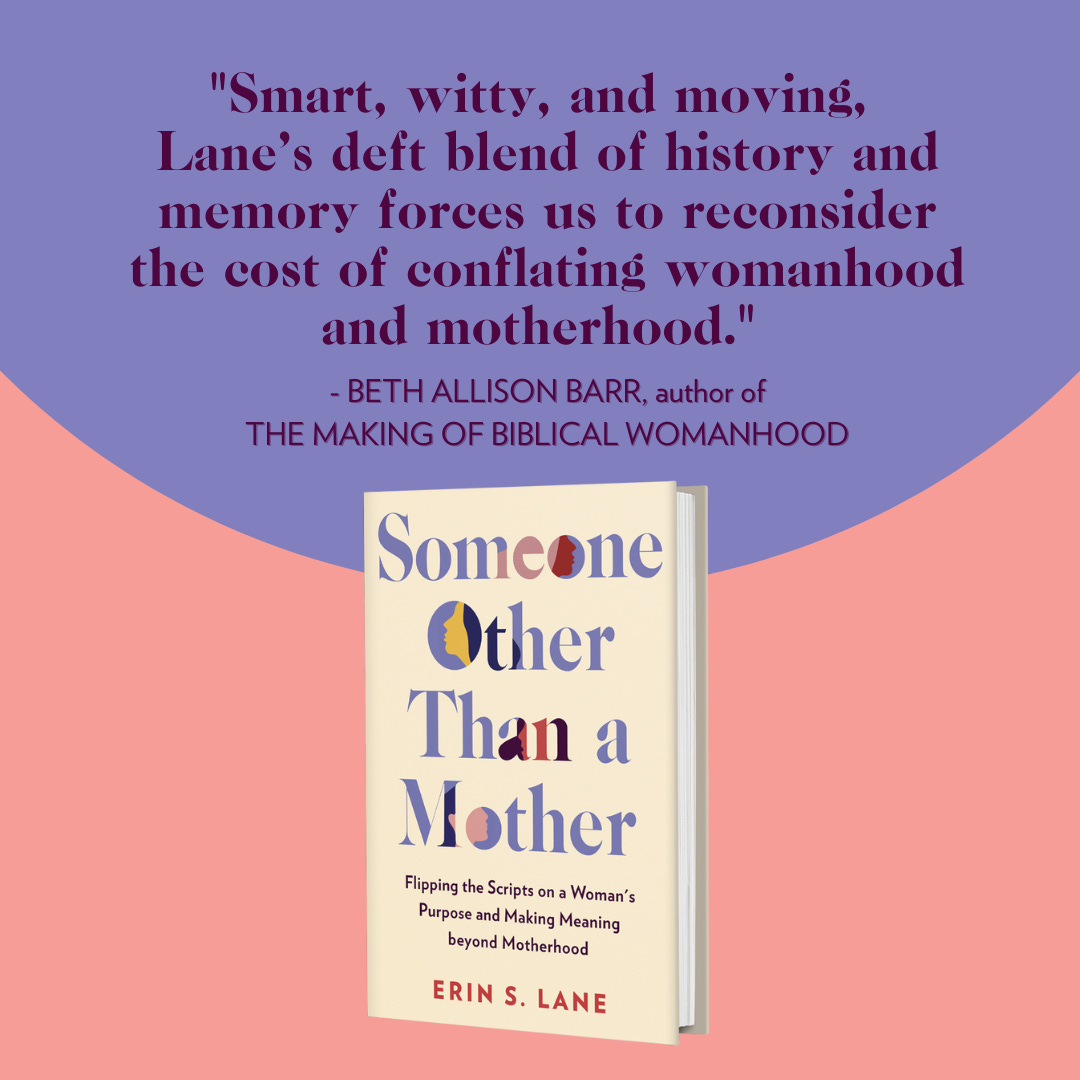
P.P.P.S. My book is coming out soon and very soon. As a practice of remembering its “good enoughness,” I’m sharing others’ praise until I can believe it for myself. Below is an especially savory blurb from Beth Allison Barr.
Thank you for sharing this important message.